With Property and Construction (‘P&C’) typically the number one sector for insolvencies in England & Wales, it is essential for credit professionals to have a strong understanding of the industry.
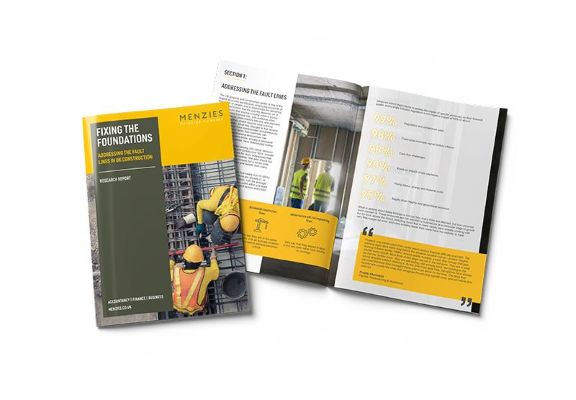
In our newly published P&C research report, we surveyed 250 senior finance decision makers across UK P&C firms to better understand the challenges they are currently facing. The key findings revealed:
- Rising costs pressures, supply chain disruption and labour shortages
- Legislation changes such as the Renters Rights Bill and various tax increases
- Sustainability and ESG requirements
- Reduced demand for commercial property due to hybrid working
- Changes to planning regulation
- Decline in high street retail and the need to repurpose
- Higher interest rates and cost of borrowing, more cautious borrowing
- Risk, liability and insurance challenges
- Succession concerns
Worryingly our research showed that 86% of UK P&C firms are already experiencing, or at risk of serious financial distress, with the average firm expecting to reach that point within 8 months – closely reflecting the insolvency trends that are being reported in the sector.
Construction activity has continued to decline, with Construction News reporting earlier this year that output had fallen for the 14th consecutive month. In addition, it was reported last year that demand for concrete had dropped to a 62-year low.
Are there any signs of optimism?
Before the conflict in the Middle East, which has since driven further increases in fuel and energy costs, the main headwinds affecting growth in the P&C sector came in the form of continued high interest rates, construction materials inflation, labour shortages, planning delays, delays caused by the Building Safety Act and wider economic uncertainty continuing to delay investment decisions.
We continue to anticipate that 2026 should see growth, given the impact of Government policy to reform the planning system, increase housing supply and public investment in energy infrastructure, schools and hospitals taking hold.
However, many sites remain on hold whilst uncertainty persists. Although there had been growing optimism as inflation eased and interest rates appeared to be moving in the right direction, the Middle East conflict has significantly impacted confidence in this sector.
Why are insolvencies made up largely of construction companies?
Insolvencies usually produce a ‘domino effect’. If one construction company is not being paid because of the insolvency of one of its customers, the repercussions can be far-reaching, depending on the size of the debt.
As an example, the collapse of Carillion in 2018 directly affected approximately 30,000 suppliers, subcontractors and other creditors owing roughly £2 billion. It also impacted 450 government contracts across the UK, covering areas such as schools, hospitals, prisons and defence.
Can liability be extended?
The Building Safety Act 2022 has introduced major reforms designed to give tenants and owners greater rights and protections across the UK. This act holds those responsible for building safety defects to account and includes building liability orders. The act broadens who can be pursued in relation to defects. Previously it was common for the entity responsible for the defect to have been dissolved. A claim can now be sought against the offending party’s associate entities, and any successful claim would attach to that associate company’s assets.
What should a credit controller be looking out for?
As with any debt owed, delays in payment or a customer failing to respond to requests can be signs that they may be running into cashflow difficulties. Documenting such communication could be vital further down the line, should an eventual Insolvency Practitioner need to pursue a claim for wrongful trading or director misfeasance.
ACCESS OUR RESEARCH REPORT HERE
Contact Our Experts