Whether you’re planning for retirement, preparing the next generation to take over, stepping back from day-to-day involvement, or considering a future sale, succession and exit planning is essential to protecting the value you’ve built in your business. A successful transition rarely happens by chance. The most effective plans are put in place early, aligned with both personal and commercial objectives, and supported by the right advisers to ensure the process is structured, tax-efficient and achievable.
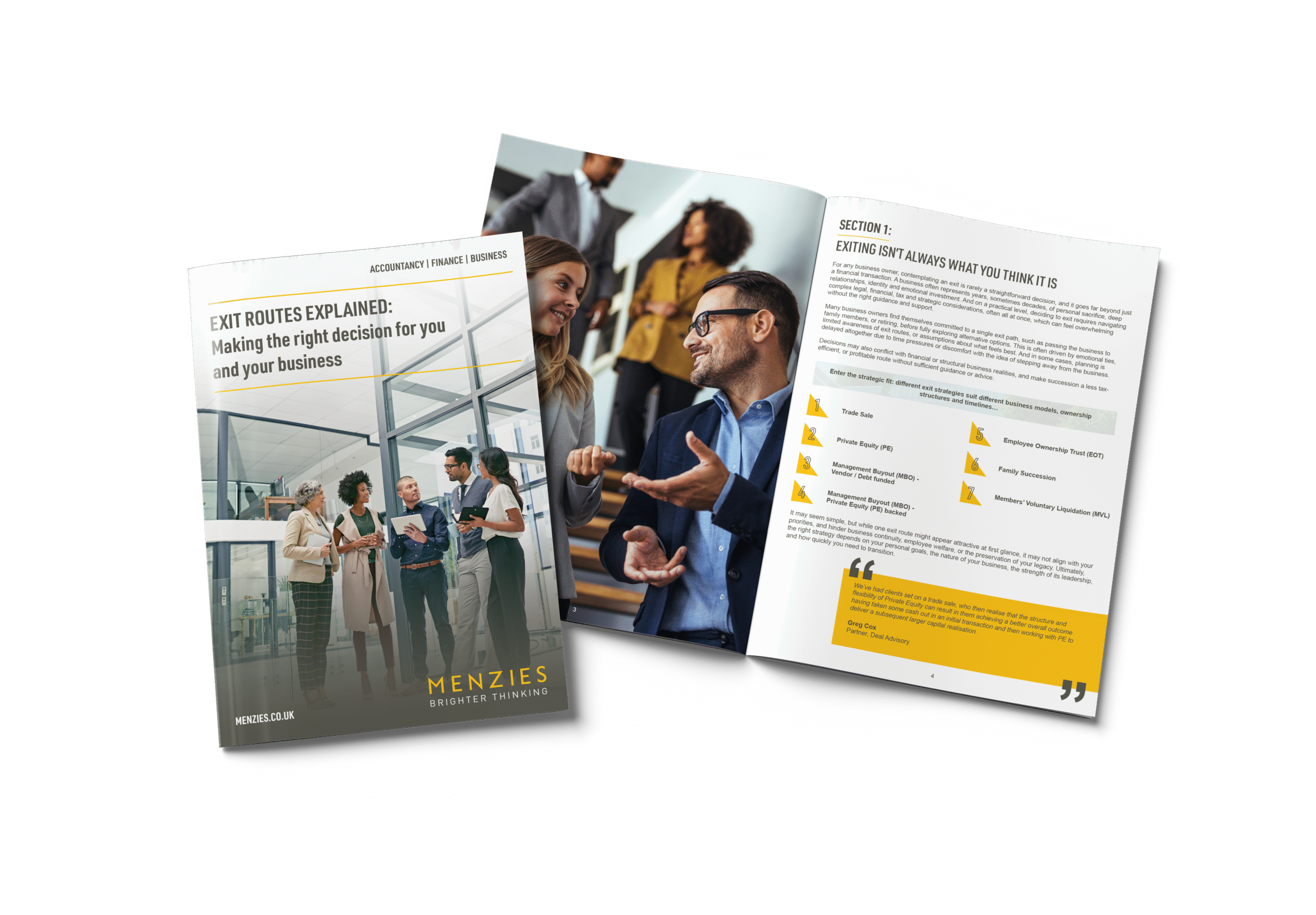
ACCESS OUR WHITEPAPER HERE

Are you ready?
Before embarking on succession or exit planning, it’s important to take a step back and clearly define what you want to achieve, as well as assess whether the business is ready for transition.
Key questions to consider include:
- What are your personal objectives and preferred timescales for stepping back or exiting?
- Do you intend to fully exit, reduce your involvement, or remain in an advisory role?
- Is there a clear successor in place – internally, within the family, or externally?
- To what extent does the business rely on you personally, and what risks does that create?
- Have you considered how the transition may impact employees, customers and suppliers?
- Have you reviewed the structure of the business and the potential tax implications?
- Do you have trusted advisers in place to support you through the process?
Being clear on these points early can help minimise delays, uncertainty and missed opportunities later on.
Identifying the right succession route
Once you understand your objectives, the next step is to identify the most appropriate route for succession or exit. This depends on your goals, the business model, and who may be best placed to take ownership or leadership forward.
Common routes include:
- Management buyout (MBO)
- Family succession planning
- Sale to a third party
- Members’ voluntary liquidation (MVL)
- Employee ownership trust (EOT)
- Partial sale or phased exit to Private Equity
Each option carries its own commercial, legal and tax considerations, and choosing the right route can have a significant impact, and influence both value realisation and long-term continuity of the business.
Is the business ready for transition?
Succession and exit planning is not just about selecting the right route, it’s also about ensuring the business is in the best possible shape to support a smooth transition.
Important considerations include:
- Strengthening the leadership team and reducing reliance on the owner
- Ensuring robust financial reporting and effective performance tracking
- Reviewing contracts, customer concentration and supplier dependencies
- Identifying operational risks or inefficiencies
- Developing clear plans for key employees and retention
- Putting appropriate governance and decision-making structures in place
Taking these steps can help maximise business value, enhance buyer confidence, and minimise disruption during periods of change.
Planning the deal: value, structure and tax
Where an exit involves a sale or transfer of ownership, early planning is critical to understanding how value will be realised and how the transaction should be structured.
Key areas to review include:
- How the business will be valued and the factors that drives value
- The likely deal structure and terms
- Whether the exit will involve staged payments or earn-out provisions
- Available tax reliefs and planning opportunities
- How the proceeds will support your longer-term personal financial plans
Having clarity on these factors helps ensure you exit on the right terms and with fewer surprises.
ACCESS OUR WHITEPAPER HERE
The next steps
There are many moving parts in succession and exit planning, and specialist advice can make a meaningful difference. Our Deal Advisory team works with business owners to create clear, practical plans that protect business continuity and support successful outcomes. Whether that means passing the business on, stepping back, or preparing for a sale.
If you are considering succession or exit planning and would like to explore your options, please get in touch at enquiries@menzies.co.uk.