The limits of traditional operating models for numerous firms have been revealed over the past few years. Construction has long depended on highly competitive tendering, fixed-price contracts and tight margins, where work is often won by offering the lowest bid and the quickest delivery. This method works in relatively stable conditions. In today’s environment – it leaves firms increasingly exposed – where material costs, energy prices and labour availability can abruptly change.
Construction accounted for 17% of all company insolvencies in 2025, according to the Insolvency Service, repeatedly placing the sector at the top of the UK’s insolvency rankings. The UK construction sector remains under significant strain. Insolvencies are nothing new in construction, but the persistence of these figures suggests deeper structural pressures that many firms are still struggling to address.
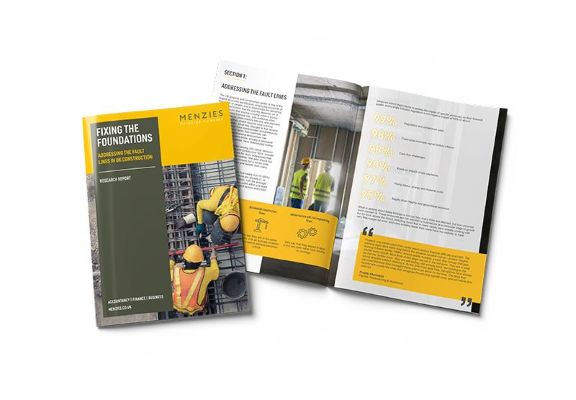
Research from Menzies’ Agile Advantage Report reveals that nearly three quarters (75%) of construction businesses said their agility had been constrained over the past year, while almost half (49%) recognized budgeting and cashflow pressures as their largest barrier to manoeuvre market volatility. This is based on a survey of more than 500 UK business leaders – including over 50 from the property and construction sector – highlighting the scale of the challenge.
Leaders are also feeling the pace of change. A third (33%) say they now have less time than ever to make decisions because conditions are shifting rapidly, and 18% admit in the past year they missed a major opportunity because they moved too slowly. In short, a great number of construction firms are operating in conditions that traditional business models were never designed to handle.
Fixed-price risks in an unstable market
Changes to immigration rules post-Brexit, alongside a maturing labour force, mean fewer skilled workers are available, and these labour shortages are exacerbating the challenge. Our research found almost one in five businesses (19.8%) now identify skills shortages as a grave external risk, reflecting the increasing strain on project delivery across the sector.
Large projects often run for multiple years and are guaranteed through competitive tenders where keeping costs low is essential to winning work. The use of fixed-price contracts is one of the most common triggers pushing construction firms from financial pressure into formal insolvency. The risks incorporated in these contracts are becoming harder to manage therefore causing difficulty. What appeared economically feasible at tender stage can quickly become a loss. Material costs continue to rise beyond expectations and when prices shift mid-project, the contractor is often left absorbing the difference.
Combined, these pressures leave firms with extended lead times, tighter margins and far less adjustability to absorb cost shocks.
Investment is decelerating
As a result of the problems being encountered by the construction sector, many firms are pulling back on investment. In some instances, this includes areas that would normally strengthen resilience. Our research found that 84% of construction businesses reported pausing or reducing capital expenditure last year. A third (33%) said they had scaled back investment in AI or digital transformation, while 25% had reduced spending on training and development.
Postponing investment in operational capability, technology and skills can exacerbate the difficulty of change, despite cutting back on expenses in the short-term feeling essential. Restructuring a struggling business requires a widespread reassessment of the company’s structure, workforce, project mix and long-term strategy; and is rarely just about liquidity.
Cash flow is the trailing indicator, not the leading cause
Present circumstances demand a more structured approach to strategy, investment and risk investment and although construction has experienced recurring peaks and troughs, firms that strengthen risk management, adopt more realistic bidding strategies and maintain operational agility will be in a far better place to navigate any challenges that lie ahead challenges that could lie ahead.
Adapting to the current environment often requires a more disciplined approach to project selection and bidding. That may mean avoiding projects that fall beyond a company’s experience, bidding for more realistic but fewer contracts, factoring cost contingencies and labour shortages into tenders. Winning fewer contracts may seem counterintuitive in a competitive market, but the alternative can be far riskier: securing work that becomes loss-making as costs shift or delivery timelines extend.
Stronger oversight throughout the life of a project is also needed by leadership teams. Whether contracts remain commercially viable requires consistent monitoring as conditions change. Businesses should not just be focusing solely on-stage completion or short-term cashflow fixes.
Cashflow problems are usually the immediate concern when companies seek restructuring advice. Rising costs, late payments and extended debtor terms can quickly create liquidity stress. But in many cases, the underlying issues begin earlier in the project lifecycle, and can arise from weak risk assessment, unrealistic tender pricing and taking on contracts outside a firm’s expertise.
Research methodology
The research was conducted by Censuswide. A sample of 500 senior business leaders (CEO, CFO, CIO, COO, CMO, Managing Directors, Directors+) in medium sized firms and above (50+ employee) were polled. Of this, 70 operate in UK retail. Censuswide abides by and employs members of the Market Research Society and follows the MRS code of conduct and ESOMAR principles. Censuswide is also a member of the British Polling Council. The data was collected between 6th – 18th June 2025.
ACCESS OUR RESEARCH REPORT HERE
Contact Our Experts